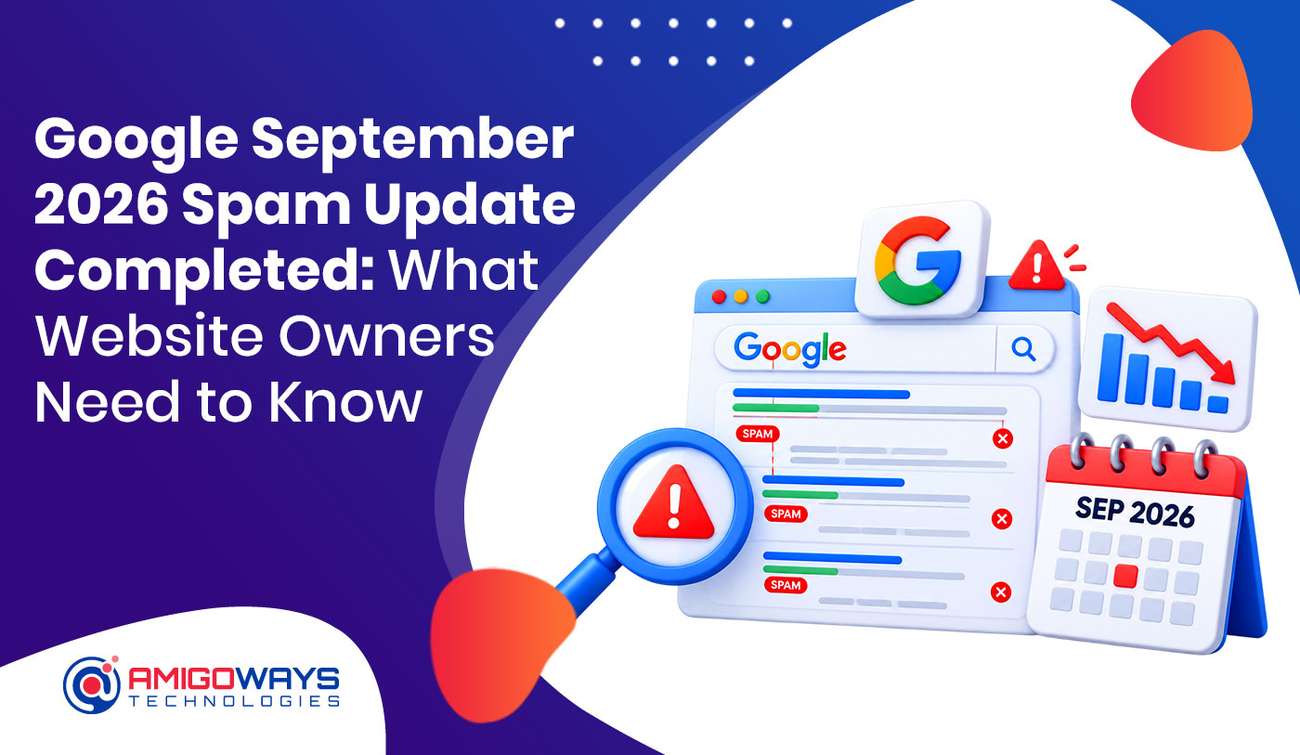

Google officially completed the September 2026 Spam Update rollout on October 8, 2026. The update began on September 24, 2026, and was rolled out globally across all languages, taking nearly two weeks to complete. Website owners can now evaluate its impact on search rankings, website visibility, and organic traffic.
Unlike core updates, which focus on improving overall search quality, spam updates specifically target spammy content and practices that attempt to manipulate search rankings without providing genuine value to users.
In this article, we’ll explain what the September 2026 Google Spam Update means for website owners, how it may affect search performance, what Google has officially announced, and the steps businesses should take following the completed rollout.
For more insights into Google’s latest algorithm changes and their impact on SEO, explore the latest updates on the Amigoways Blog, where we share SEO insights, search engine updates, and practical strategies to improve website visibility and organic performance
What We Know About Google's Latest Spam Rollout
The September 2026 Google Spam Update is Google’s latest update aimed at improving search quality by reducing spam in search results. Google officially started rolling out the update on September 24, 2026, and confirmed that it applies globally across all languages. The rollout took nearly two weeks to complete, and some websites may have experienced ranking fluctuations during that period.
Unlike a Core Update, which focuses on overall ranking systems, a Spam Update specifically targets websites that violate Google’s spam policies. This includes spammy link-building, manipulative SEO tactics, low-quality content, and other practices designed to artificially improve rankings.
The main goal of this update is simple: help users find more trustworthy, useful, and relevant content while reducing the visibility of spam across Google Search.Now that the rollout has been completed, website owners can review ranking and traffic changes while ensuring their websites follow Google’s spam guidelines.
Why Did Google Release This Spam Update?
Google’s goal is simple:
Show users the most helpful content while reducing spammy and manipulative content.
Over the years, some websites have attempted to gain rankings using tactics such as:
According to Google’s spam policies, practices such as artificial link building, keyword stuffing, cloaking, scaled content abuse, expired domain abuse, and site reputation abuse can negatively affect search quality. The September 2026 Spam Update is intended to help Google’s systems identify these practices more effectively and reduce their impact on search results.
Google regularly updates its systems to detect these tactics more effectively.
The September 2026 Spam Update is another step in improving Google’s ability to identify spam and prevent it from ranking highly in search results.
Google's Official Statement About Spam Updates
Google explains that its spam detection systems work continuously to identify and reduce spam across Search. However, from time to time, Google makes significant improvements to these systems and officially announces them as spam updates. The September 2026 Spam Update is one such update and is designed to improve Google’s ability to detect spam and enforce its spam policies more effectively.
According to Google’s announcement, the update applied globally across all languages and took nearly two weeks to complete its rollout. Google also advises website owners who experience ranking changes to review their websites against its spam policies and ensure they are following recommended guidelines
What Is SpamBrain?
SpamBrain is an advanced machine learning system used by Google to identify and reduce spammy content within its search results.
Instead of relying only on manual reviews, SpamBrain automatically identifies suspicious patterns and spam signals at scale. SpamBrain helps Google detect unnatural links created solely to manipulate rankings.
Examples include:
- Paid links passing ranking value
- Link schemes
- Private blog networks (PBNs)
- Excessive reciprocal linking
Low-Value Automated Content
Content published mainly to gain search visibility without providing meaningful value to visitors.
Google does not automatically consider AI-generated content spam. However, content created only to rank without providing value can be classified as spam.
Scaled Content Abuse
Large volumes of content produced primarily for search rankings rather than user benefit.
Hacked Content
Pages injected with spam through website security vulnerabilities.
Cloaking
Showing different content to search engines and users.
Which Websites Should Pay Close Attention to This Update?
Not every website will be affected. Websites following Google’s guidelines may see little or no impact. Sites that are more likely to experience ranking changes include:
Websites Using Spammy SEO Tactics
Examples:
- Buying backlinks
- Link exchanges at scale
- Automated link building
Websites Publishing Low-Quality Content
Examples:
- Thin content
- Duplicate content
- Mass-produced pages with little value
- Pages written only around keywords
Websites Relying on Manipulative Ranking Strategies
Examples:
- Keyword stuffing
- Hidden text
- Doorway pages
- Cloaking
Websites With Poor Content Quality Signals
Examples:
- Content lacking expertise
- Outdated information
- Pages offering little value beyond what already exists online
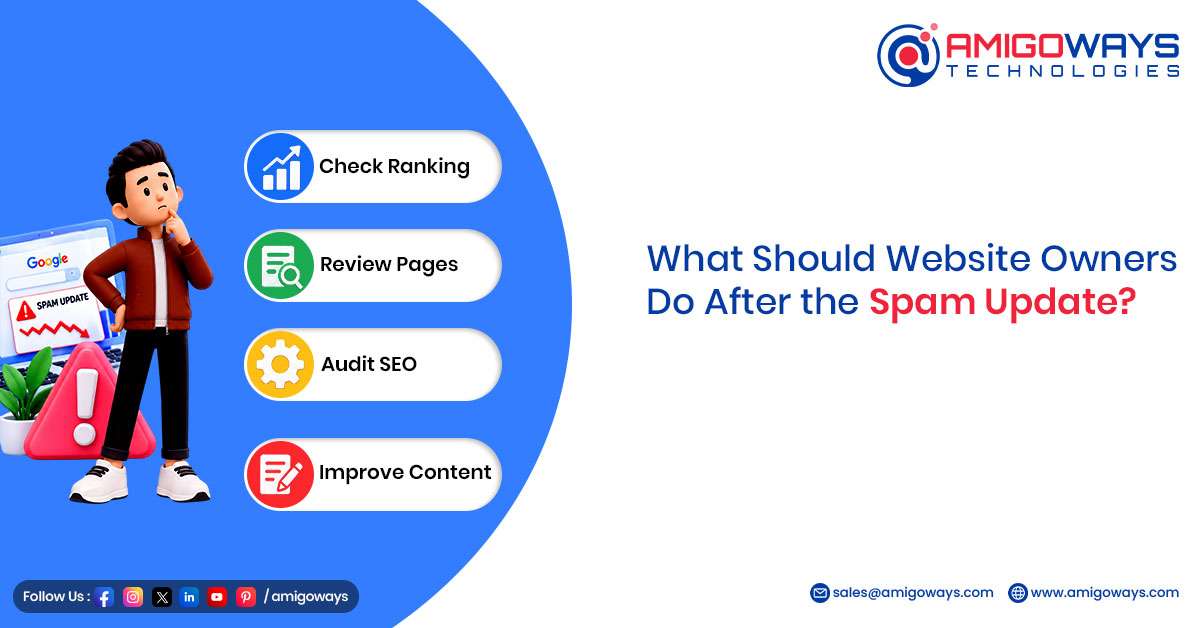
What Should Website Owners Do After the Spam Update?
With the rollout now complete, website owners can better understand the update’s impact on their websites. Reviewing performance data and following Google’s quality guidelines can help improve long-term search visibility.
- Check ranking and traffic changes
- Review impacted pages
- Monitor backlink quality
- Update thin or low-value content
- Avoid manipulative SEO tactics
- Prioritize content created for users
What If Your Website Experiences a Ranking Drop?
A ranking drop during a spam update does not automatically mean that a website has received a penalty. Since the rollout has now been completed, website owners can begin analyzing whether ranking changes are temporary fluctuations or the result of Google’s spam detection systems identifying policy violations.
If your rankings decline, start by reviewing the affected pages. Check whether the content provides real value to users and whether your website follows Google’s spam policies. It is also worth reviewing your backlink profile and removing any practices that may appear manipulative.
Most importantly, avoid making rushed decisions based on short-term ranking changes. Instead, review your website’s performance data, identify affected pages, and focus on improving content quality, user experience, and compliance with Google’s spam policies. A ranking drop does not always indicate a penalty, and recovery often depends on addressing quality issues and maintaining long-term SEO best practices.
Key Takeaways From the September 2026 Google Spam Update
- Google launched the update on September 24, 2026.
- The rollout was completed on October 8, 2026.
- The update applied globally across all languages.
- The rollout lasted nearly two weeks.
- Google’s SpamBrain systems continue improving spam detection.
- Websites using manipulative SEO tactics may experience ranking losses.
- Sites following Google’s spam policies are less likely to be negatively affected.
- Website owners should review content quality, backlinks, and spam policy compliance.
Final Thoughts
With the September 2026 Google Spam Update rollout completed, website owners can assess changes in their search rankings, website visibility, and organic traffic. The update reinforces Google’s focus on identifying spammy practices and prioritizing content that delivers genuine value to users.
Businesses should focus on creating helpful, original, and high-quality content, improving user experience, and following Google’s spam policies to maintain sustainable search visibility.
For more SEO insights, Google algorithm updates, and practical strategies to strengthen your website’s organic performance, explore the latest articles on the Amigoways Blog. Stay informed about search engine changes and take proactive steps to build a stronger online presence.