
Digital assistants are becoming more advanced, helping users with everything from finding information to managing everyday tasks and responsibilities. A few years ago, most AI tools could only answer questions, generate content, or help with basic tasks. Today, the focus is shifting toward AI agents that can actually perform tasks on behalf of users.
One of the latest developments in this space is Meta Muse AI, a personal AI agent introduced by Meta. Unlike traditional AI assistants that mainly provide information, Muse is designed to help users complete tasks, manage activities, and handle everyday responsibilities more efficiently.
For more updates on artificial intelligence, emerging technologies, and digital trends, explore the Amigoways Blog.
If you have heard about Meta Muse AI and are wondering what it does, how it works, and whether it is different from other AI tools, this guide explains everything in simple terms.
What Is Meta Muse AI?
Most AI tools are commonly used for finding information, generating content, or assisting with specific requests. Meta Muse AI is attracting attention because it is designed to go a step further by helping users manage and complete tasks. Instead of simply responding to prompts, Muse focuses on supporting everyday activities such as planning, organization, and task coordination.
One of the key reasons behind this growing interest is its ability to continue working on tasks even when users are not actively interacting with it. According to Meta, Muse can work in the background, monitor progress, provide updates, and request approval before carrying out important actions.
This creates a different experience compared to traditional chatbots, where users typically need to guide every step of the conversation. By combining conversational capabilities with task management features, Muse aims to provide more practical support for everyday activities.
As interest in AI agents continues to grow, this approach has helped Meta Muse AI become one of the most talked-about AI launches of 2026.
Why Is Meta Muse AI Getting Attention?
Most AI tools are commonly used for finding information, generating content, or assisting with specific requests. Meta Muse AI is attracting attention because it is designed to go a step further by helping users manage and complete tasks. Instead of simply responding to prompts, Muse focuses on supporting everyday activities such as planning, organization, and task coordination.
One of the key reasons behind this growing interest is its ability to continue working on tasks even when users are not actively interacting with it. According to Meta, Muse can work in the background, monitor progress, provide updates, and request approval before carrying out important actions.
This creates a different experience compared to traditional chatbots, where users typically need to guide every step of the conversation. By combining conversational capabilities with task management features, Muse aims to provide more practical support for everyday activities.
As interest in AI agents continues to grow, this approach has helped Meta Muse AI become one of the most talked-about AI launches of 2026.
Key Features of Meta Muse AI
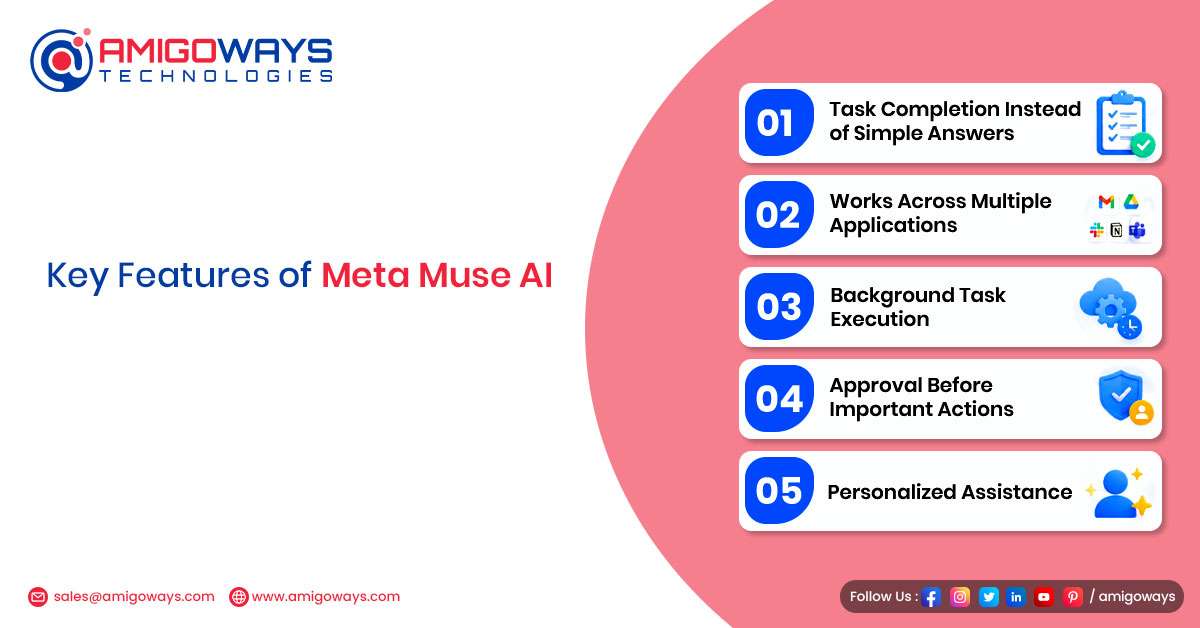
1. Task Completion Instead of Simple Answers
Most AI applications are commonly used to provide information, generate content, or assist users with specific requests. Meta Muse AI is designed to go a step further by helping users manage and complete tasks. Whether it is organizing schedules, tracking activities, or handling routine responsibilities, the platform focuses on making everyday work more manageable.
By focusing on task management and execution, Muse offers a different experience from conventional AI chat tools.
2. Works Across Multiple Applications
People use different apps every day for communication, scheduling, social media, and productivity.
Muse can connect with various services and applications to help manage tasks more efficiently. Meta says users can connect tools such as email, calendars, Instagram, and other supported services.
This allows information to flow between different platforms without requiring users to move back and forth manually.
3. Background Task Execution
One of the most interesting features of Muse is its ability to keep working after a task has been assigned.
For example, if a task requires monitoring information, checking updates, or waiting for responses, Muse can continue working in the background and return with progress updates when needed.
This helps users save time and reduces the need for constant follow-up.
4. Approval Before Important Actions
Many users worry about AI making decisions without permission.
Meta has addressed this concern by building approval systems into Muse. Before sending emails, making purchases, or completing sensitive actions, Muse requests user approval.
As a result, users can benefit from greater convenience without giving up control over important actions.
5. Personalized Assistance
Muse is designed to learn user preferences and remember useful information over time.
For example, it can remember recurring tasks, personal preferences, and long-term goals to provide more relevant suggestions in the future.
The goal is to make the assistant more useful as users continue working with it.
How Does Meta Muse AI Work?
Meta Muse AI operates through a system called Muse Secure VM.
In simple terms, this is a dedicated virtual environment where Muse performs tasks on behalf of the user. Instead of directly accessing services in an uncontrolled way, Muse works through a secure system designed to manage permissions, protect information, and keep users informed about its actions.
When a user gives Muse a task, the AI:
- Understand the request.
- Creates a plan to complete the task.
- Uses available tools and connected services.
- Continues working when necessary.
- Requests approval for sensitive actions.
- Provides updates and results.
This process allows Muse to handle multi-step tasks rather than simply responding with text.
What Can Meta Muse AI Help With?
The practical use cases of Muse are one reason why people are paying attention to it.
Some examples include:
- Managing reminders
- Organizing schedules
- Researching information
- Creating documents
- Monitoring tasks
- Managing goals
- Booking appointments
- Filling out forms
- Sending emails with approval
- Shopping assistance
- Travel planning
According to Meta, Muse can also interact with websites and supported services when completing certain tasks.
As the platform evolves, additional capabilities are expected to be added.
Meta Muse AI vs Traditional Chatbots
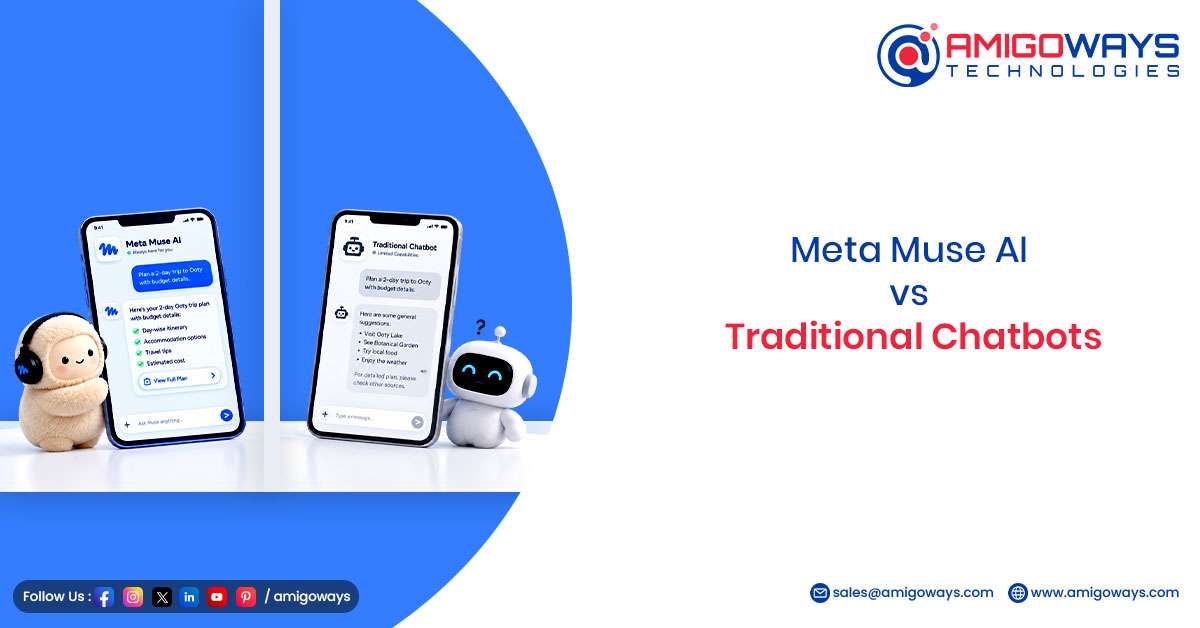
Many people compare Muse with traditional chatbots. The difference is easier to understand with a simple example.
Imagine you need to plan a business trip. A traditional chatbot may provide travel suggestions, hotel recommendations, and planning tips.
A personal AI agent like Muse aims to help organize the process, track tasks, gather information, and support execution across multiple steps.
This shift from answering questions to performing actions is what makes AI agents different from earlier generations of AI tools.
Benefits of Using Meta Muse AI
Saves Time
Many daily tasks involve repetitive steps. By automating portions of these tasks, users can spend less time on routine work and more time on important activities.
Improves Productivity
Instead of managing multiple tools separately, users can rely on a single assistant to coordinate tasks and organize information.
Reduces Manual Work
Tasks such as scheduling, reminders, research, and information gathering can take considerable time.
Muse helps reduce the amount of manual effort required for these activities.
Keeps Users Organized
Whether managing personal goals or professional projects, having a centralized assistant can make it easier to stay on track.
Works Continuously
Unlike traditional software that only functions while actively being used, Muse can continue working in the background and provide updates later.
Privacy and Security Considerations
Whenever an AI tool works with personal information, privacy becomes an important topic.
Meta says Muse was built with privacy and security controls, including permission management, secure credential storage, approval systems, and activity tracking. Users can decide what services to connect and what level of access to provide.
At the same time, some industry observers have raised concerns about how much personal information users may choose to share with AI agents. Discussions around data access, transparency, and user control continue to be important as personal AI systems become more common.
For users, the best approach is to review permissions carefully and connect only the services they are comfortable sharing with any AI assistant.
What Does the Future Look Like for Meta Muse AI?
Meta sees AI agents as an important part of the future of digital assistance.
The company is expanding the Muse ecosystem through technologies such as Muse Spark, the underlying model family that powers many of Meta’s AI experiences. Meta also plans to extend AI capabilities across its broader ecosystem, including messaging platforms and future connected devices.
As AI technology continues to evolve, personal AI agents may become increasingly capable of handling everyday tasks that currently require multiple apps and significant user effort.
Final Thoughts
Meta Muse AI reflects how digital assistants are evolving to support users in more practical ways. Rather than simply answering questions, Meta Muse AI is designed to help with task management, organization, and everyday activities, making it easier to handle responsibilities across different platforms.
Features such as background task execution, cross-application support, and user-controlled approvals give Meta Muse AI a different role compared to many traditional AI assistants. As more people look for tools that can save time and simplify routine tasks, solutions like Meta Muse AI are expected to play a bigger role in everyday life.
While the technology is still developing, Meta Muse AI offers a glimpse into how future digital assistants may help users stay organized, manage tasks more efficiently, and make better use of their time.
For more insights on emerging AI technologies and digital trends, explore the Amigoways Blog.